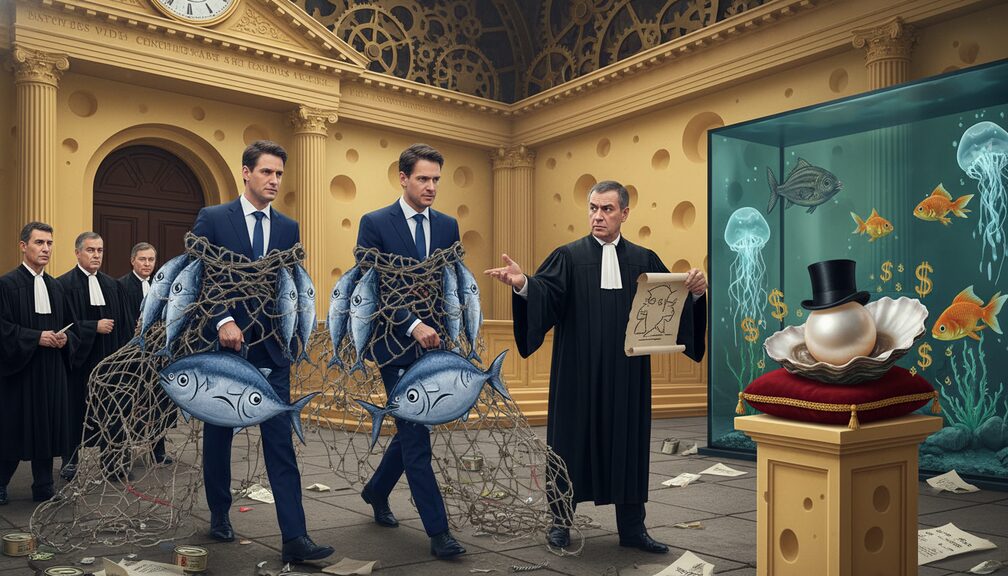
ZURICH—Switzerland’s federal prosecutors have announced criminal charges against Credit Suisse and its new parent company, UBS, after the infamous “tuna bonds” scheme left Mozambique’s economy floundering and the global financial industry swimming in shame.
The case revolves around hundreds of millions of dollars in loans, originally meant to finance Mozambique’s fishing fleet, which instead ended up feeding a voracious school of international bankers and arms dealers rather than hungry locals. Farmers in Mozambique are still reportedly waiting for their promised “tuna tractors.”
“We expect a certain elegance and subtlety from our white-collar criminals,” said lead prosecutor Hans Gruener, announcing the charges in front of a giant, inflatable tuna. “Frankly, we were hoping for caviar bonds, not tinned fish.”
A UBS spokesperson denied wrongdoing, explaining, “We were assured the deal would be sustainable—both for Mozambique’s economy and our year-end bonuses. In retrospect, perhaps ‘Operation Fishy Loans’ was not the best file name.”
Meanwhile, Credit Suisse’s chief compliance officer, Franziska Lachs, insisted that “organizational deficiencies” simply meant forgetting to add lemon and pepper. “If we’d called it a ‘Shark Investment Fund’, nobody would have blinked an eye,” Lachs noted, adjusting her novelty fish tie.
The trial is set to begin next week, with prosecutors requesting the banks commit to only laundering money through endangered aquatic mammals in future deals, “to keep things interesting.”