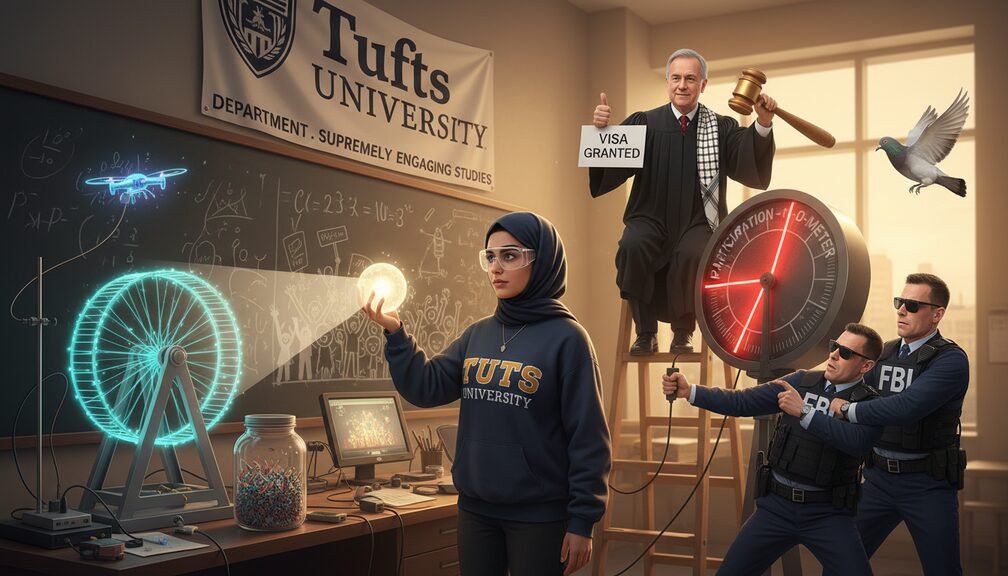
MEDFORD, MA — Citing a sudden and unexplained national allergy to well-informed foreign students with opinions, federal officials this week praised themselves for protecting the country from Rümeysa Öztürk, a Turkish PhD candidate at Tufts University whose dangerous research into children’s use of social media threatened to introduce ‘complex thought’ into the American academic ecosystem.
Öztürk was apprehended in March by ICE agents wearing Ray-Bans and carrying emojis instead of badges, in what officials are calling ‘Operation No Books for You.’ Homeland Security spokesperson, Cheryl Hightower, explained, “We simply can’t allow students to write op-eds or think critically, especially if they were born in a country more than 3,000 miles from Boston. It’s just too risky in these times.”
After six weeks in a detention center, during which Öztürk reportedly taught guards about TikTok’s algorithmic bias, a federal judge ruled she could return to campus as long as she promised not to write any more op-eds or notice things. “It was hard,” Öztürk said in a statement. “At one point, agents tried to make me recant my research hypothesis in exchange for a green card.”
Tufts administrator Benjamin Quibble praised the judge’s ruling but added, “We don’t want to make a habit of this. If too many of our students regain their visas, the library could become unmanageable.” Meanwhile, ICE confirmed they are already developing new detection methods for ‘excessive student engagement,’ including a sniffer dog trained to alert at the smell of peer-reviewed articles.