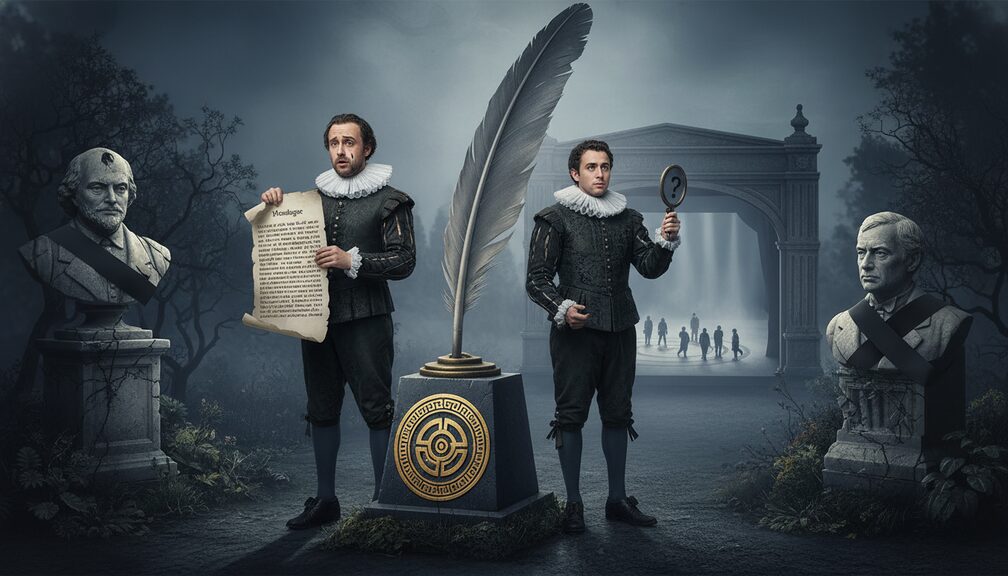
Rosencrantz: It is with a profound sense of bewilderment—and admittedly a pinch of relief—that we announce the passing of Tom Stoppard, the man who gave us words when we had none, meaning when we were mainly confused, and existential dread dressed up as comedy.
Guildenstern: Yes, without his sparkling wit and labyrinthine scripts, we’d still be those two shadowy figures wandering aimlessly through Elsinore, asking, “What is the meaning of this scene?” and receiving only vague gestures or, worse, silence.
Rosencrantz: Stoppard didn’t just write us into existence; he inundated us with labyrinths of language so complex that even we got lost. At times, I swear his plays were written to make actors like us question the meaning of acting itself—or at least to stall our deaths a little longer.
Guildenstern: I remember the moment he handed us our first lines. We stood there, baffled: “Sure, we’ll talk about quantum mechanics, Shakespeare, and the absurdity of life—with jokes!” A tall order for two hapless courtiers allergic to clarity.
Rosencrantz: Over the years, Tom meticulously crafted scenarios where we pondered everything from fate to free will—while dodging sniper rifles and philosophical punchlines. His mastery turned every pause into a profound crisis and each flubbed line into a cosmic joke.
Guildenstern: We must thank him for gifting us the immortal question, “Is life a game?” because honestly, we never got an answer, but we sure had fun pretending.
Rosencrantz: So here’s to Tom Stoppard: a man who embraced absurdity so thoroughly that he made confusion our raison d’être, leaving us forever trapped in his brilliant maze of words.
Guildenstern: May his pen rest as restlessly as his characters did—forever searching for meaning, always laughing at its absence.