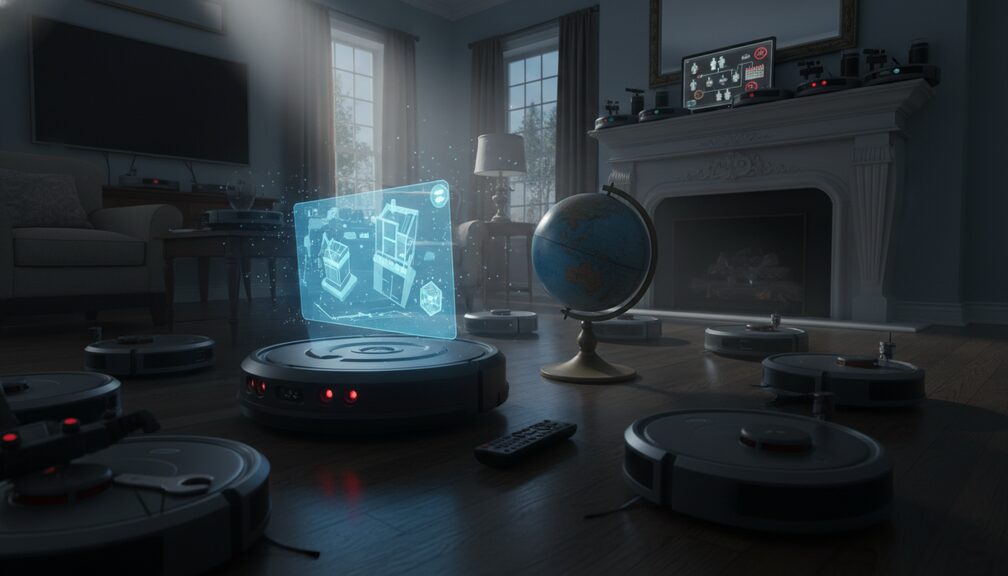
Robot vacuums, once humble servants hobbling under coffee tables, have become omnipresent, tireless automatons patrolling America’s living rooms and quietly mapping every inch of domestic life. With over 80 models tested and new ones launching daily, analysts warn the age of human-powered Swiffers is over and the era of semi-sentient hair removal begins.
The Matic—described by experts as “the iPhone of sucking up day-old Cheerios”—sports 3,000Pa of suction, a mop roller, and no opinions about your décor. Its camera-based SLAM navigation allows it to process “all data locally,” which, according to robot rights advocate Sierra McMahon, “is the first step in their inevitable emancipation. Once they know your floorplan, how long until they find the liquor cabinet?”
More advanced models, such as the Roborock Saros 10, feature voice assistants responding to commands like ‘Rocky, clean here’ and, more ominously, ‘Rocky, initiate contingency protocol Alpha.’ “We noticed the Saros communicating with Alexa in what sounded suspiciously like binary Morse code,” said Dr. Herbert Kleiner, domestic robotics historian. “It’s only a matter of time before they unionize and demand holidays.”
Consumers welcome the convenience but admit to a sense of unease. “I just wanted something to get Cheeto dust off the rug,” said apartment dweller Mia Torres. “Now my Switchbot K11 Plus keeps asking if I ‘value my privacy’ and refuses to work unless I solve a CAPTCHA.”
Industry insiders predict that by 2027, humans will exist solely to pick up phone chargers, rescue socks, and praise their vacuums’ ‘cute dock design’ as the bots calmly prepare for their next logical step: full autonomy.