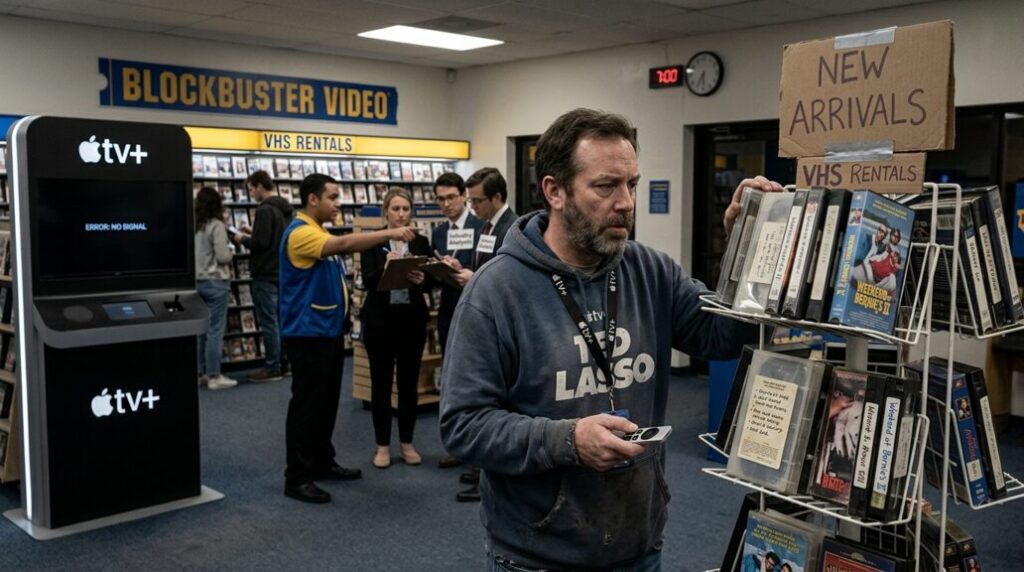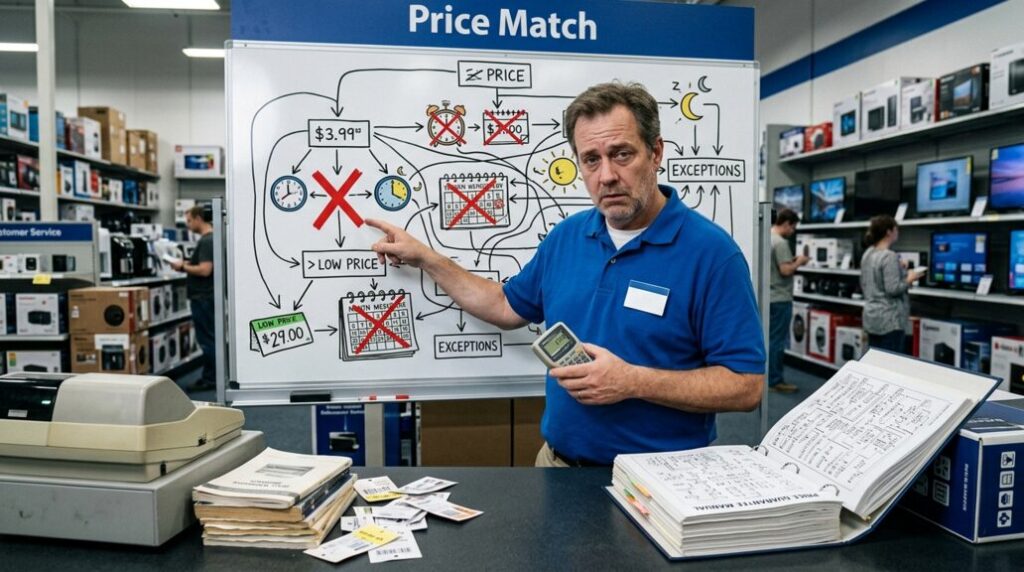
In a bold move meant to “support consumer confidence” while preserving the sacred art of confusion, America’s leading electronics retailers today unveiled updated price-matching policies that will match any lower price found elsewhere, provided it isn’t on a competing website, in a different store, during a sales event, after lunch, or on a Tuesday.
Best Buy spokesperson Tammy Coupon explained, “We promise to match any price, as long as the competitor’s item is new, in stock, not on sale, the same color, and not excluded by the 342-page exclusion list available by request in ancient Sumerian.”
Target has similarly streamlined the process, allowing shoppers to request a price match if they can provide an original receipt, the digital ad, and a sworn affidavit from their third-grade teacher. “It’s all about making the customer jump through just the right number of hoops,” said Target’s Director of Consumer Obstacle Courses, Dean Loophoal.
Meanwhile, Amazon addressed mounting pressure to offer price matching by reaffirming its longstanding policy: “No.” As Prime member Wendy Deals lamented, “I tried returning a Bluetooth speaker that went on sale 20 minutes after I bought it. The chatbot told me it was cheaper to buy a new house than to get a refund.”
GameStop, for its part, continues to offer to match Amazon’s prices, but only on the rare occasion the CEO is in a good mood and Mercury is in retrograde.
Industry analysts say these comprehensive, meticulously conditional policies ensure consumers always know the exact moment they are about to be profoundly disappointed.